Why Does Mold Grow in AC Units? (Warmth + Darkness + Moisture)
Mold needs three basic conditions to grow: warmth, darkness, and moisture. An air conditioning system can provide all three at the same time, which is why AC units are one of the most common places for mold to develop indoors, especially in humid climates where the system runs for long stretches of the year. Understanding why these conditions form inside a unit makes it easier to see why AC mold cleaning is not an optional extra but a routine part of keeping a system safe to breathe from. The explanation below reflects the kind of inspection findings reported by providers such as Moltocare, a Dubai-based AC maintenance and duct cleaning company.
Why an AC Unit Recreates Ideal Mold Conditions
Mold spores are present almost everywhere, indoors and outdoors. They only need the right environment to settle and multiply. An air conditioning system, by the nature of how it cools air, tends to create exactly that environment inside its own components.
Warmth
While the air coming out of the vents is cold, many parts of the system are not. The drain pan, the underside of the evaporator coil, and the surrounding duct or ceiling space often sit within the temperature range mold favors, generally between 20°C and 30°C. In hot climates, the space around ductwork can stay warm even while the unit is actively cooling the room, so this condition is met almost continuously.
Darkness
The inside of an AC unit and its ductwork are seldom exposed to light. Mold spores that land on a damp surface in a lit, ventilated area are more likely to dry out or be disturbed. Inside a sealed duct or behind a coil, spores are left undisturbed in the dark, which gives them time to establish a colony.
Moisture
The cooling process itself produces water. As warm air passes over the evaporator coil, moisture condenses out of it, most of which should drain away through the condensate line. Any dust or organic film that has built up on the coil holds onto some of that moisture, and a slow or partially blocked drain leaves standing water behind. This steady moisture supply is usually the deciding factor in whether mold actually takes hold.
When warmth, darkness, and moisture line up at the same time, which happens inside most AC systems on a daily basis, mold has everything it needs to grow undisturbed.
Where Mold Typically Develops Inside an AC System
- Evaporator coil. Constant condensation combined with dust buildup makes this one of the most common starting points.
- Drain pan. Standing water collects here, especially if the pan or line is clogged.
- Condensate drain line. Biofilm and sediment build up over time, slowing drainage even further.
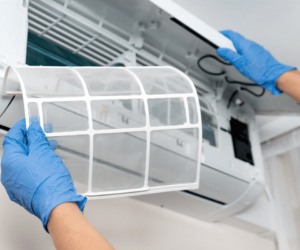
- Air filter. It traps airborne debris that can hold moisture and support surface growth.
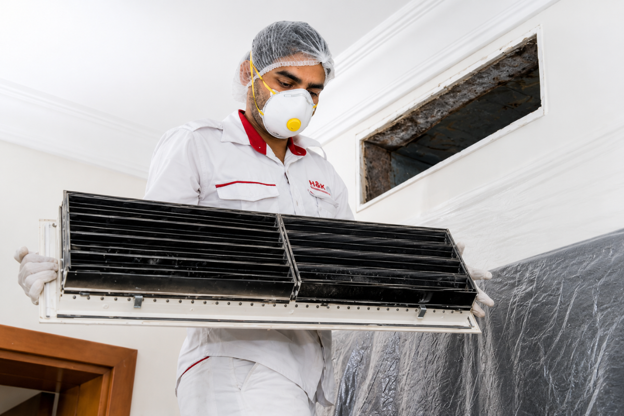
- Ductwork. Sections with low airflow or physical damage are especially vulnerable.
- Blower housing and fan blades. Dust and moisture combine here more than most people expect.
Signs Mold May Be Growing in an AC System
- A musty or stale odor when the system starts or runs
- Visible dark or greenish spots around vents, the filter, or the indoor unit
- Increased allergy symptoms, coughing, or respiratory irritation indoors
- Higher indoor humidity than expected, even with the AC running
- A film or residue on surfaces near supply vents
Why Mold Inside an AC System Matters
Mold growing inside a system that recirculates air throughout the day does not stay contained. Every operating cycle can carry spores into living or working spaces. Beyond causing an unpleasant odor, mold exposure can worsen allergy symptoms and respiratory conditions, particularly for children, older adults, and anyone with existing sensitivities. Left untreated, mold colonies also tend to spread further into ductwork and insulation, which is why routine AC mold cleaning matters more than a one-time fix.
How AC Mold Cleaning Removes and Prevents Regrowth
A professional mold removal service for AC systems typically addresses both the visible growth and the conditions that allowed it to form. This usually includes:
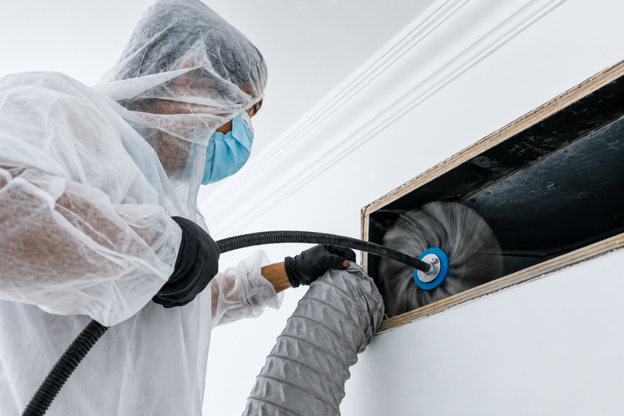
- Physically removing mold from the coil, drain pan, and accessible duct surfaces
- Disinfecting affected components with products suited to HVAC systems
- Clearing and flushing the condensate drain line
- Inspecting for damaged insulation or duct sections that trap moisture
- Checking airflow to reduce the chances of condensation pooling again
Technicians such as those at Moltocare follow this sequence specifically because removing visible mold without addressing the moisture source usually means it returns within weeks.
Preventing Mold Between Cleanings
- Run the fan for a few minutes after the AC cycles off to help dry the coil
- Check that the condensate line is draining freely, especially during humid months
- Replace or clean filters on a consistent schedule
- Address any water leaks or pooling near the indoor unit promptly
- Schedule a professional inspection at least once or twice a year
Scheduling AC mold cleaning before symptoms like odor or visible growth appear is more effective, and usually less expensive, than addressing an established colony.
Conclusion
Mold does not need unusual conditions to grow inside an AC system. It only needs warmth, darkness, and moisture to occur together, and a running air conditioner supplies all three on a regular basis. Recognizing where mold tends to form, watching for early signs like odor or visible spots, and arranging AC mold cleaning before the problem spreads are the most reliable ways to keep a system and the air it circulates clean. Working with an established provider such as Moltocare makes it easier to catch mold early and address the moisture sources that allow it to return. Our technicians identify where moisture is collecting inside a system and remove mold at the source rather than just wiping down visible surfaces. Contact us at +971 4 88 10 811 to schedule an inspection.