Air Conditioner Duct Cleaning: How Contaminants Like Pigeon Droppings End Up Circulating Through Your Home
Pigeons are a constant presence across Dubai’s residential towers, villa compounds, and apartment buildings. They roost on outdoor AC units, ledges above fresh air intake vents, and rooftop plant rooms. This puts them directly in the airflow path that feeds into your home’s ventilation system. Most residents don’t make the connection between birds on the balcony and what’s circulating through the air ducts, but the pathway is simple.
Dried droppings break down into fine dust; that dust gets drawn into the AC system’s air intake, and from there it moves through the ductwork and out through every supply vent in the building. Air conditioner duct cleaning is not a cosmetic service in Dubai’s building environments where pigeon activity around AC equipment is common; it’s the process that removes what the system has been accumulating and distributing.
How do contaminants enter the Duct System?
Central AC systems and split ducted systems both draw air from outside or from a return air plenum before conditioning and distributing it.
Pigeons roost on and around this equipment regularly. Droppings accumulate on and near the units, dry out in the heat, and fragment into fine particulate that becomes airborne when disturbed by wind, foot traffic, or the suction of the AC intake itself.
Once that particulate enters the system, the ductwork distributes it. Filters catch a portion but standard residential filters aren’t designed to trap the finest particles, and filters that are overdue for replacement are already partially blocked and bypass more than they catch.
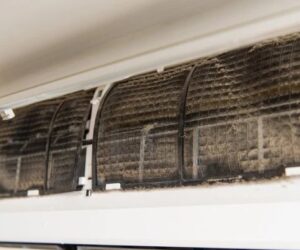
Over time, the inner surfaces of the ductwork accumulate a layer of this contaminated dust alongside general household particulate, mould, and debris. Every time the system runs, that layer gets partially disturbed and recirculated into the living space.
What Dried Pigeon Droppings Actually Contain?
This is where the health dimension of the problem becomes specific rather than general.
- Cryptococcus neoformans: A fungus whose main habitat is debris around pigeon roosts and soil contaminated with pigeon droppings. The CDC’s infection control guidance specifically notes that viable C. neoformans particles under 2 micrometres in diameter small enough to reach the alveolar level in the lungs have been found in soil contaminated with pigeon droppings.
- Histoplasma capsulatum: A fungus associated with bird droppings and soil contamination. The CDC’s environmental control guidance confirms that infections due to Histoplasma capsulatum can occur when contaminated material is disturbed and a malfunction of air-intake components allows these pathogens to enter the ventilation system.
- Psittacosis: A bacterial disease caused by Chlamydia psittaci, transmissible through inhalation of dried fecal particles from infected birds.
- Pigeon Breeder’s Lung (Hypersensitivity Pneumonitis): A chronic allergic condition that develops from repeated inhalation of proteins found in pigeon droppings and feathers. This doesn’t require a single high-level exposure it develops from sustained low-level exposure over time, exactly the kind of exposure that happens when a contaminated duct system runs daily.
What Air Conditioner Duct Cleaning Actually Removes?
Air conditioner duct cleaning in this context isn’t just about dust. The process physically accesses the ductwork and removes the accumulated layer from internal surfaces which in a Dubai apartment with pigeon activity near the AC intake can include:
- Dried organic matter from bird droppings and feathers
- Fungal spores and bacterial contamination
- General household dust, skin cells, and textile fibres
- Mould growth particularly in sections of ductwork where condensation occurs
- Insect debris cockroaches and other pests enter duct systems in older buildings
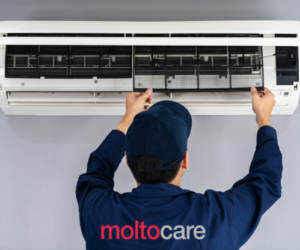
Professional air conditioner duct cleaning uses negative pressure equipment a high-powered vacuum that puts the duct system under negative pressure while brushes and compressed air tools dislodge material from the duct walls. The dislodged material is captured under negative pressure rather than redistributed into the living space. The process covers supply ducts, return ducts, the air handling unit, and drain pans where mould growth often establishes first.
Signs the Duct System Needs Cleaning
Most contamination is invisible from inside the room. But there are indicators that the duct system has accumulated enough material to warrant cleaning:
- Visible dust discharge from supply vents when the system starts
- Musty or stale odour when the AC runs
- Increased dust settling on surfaces shortly after cleaning
- Reduced airflow from specific supply vents suggesting partial blockage
- Residents experiencing unexplained respiratory symptoms, persistent cough, or allergic reactions that improve when they’re away from the building
- Visible growth or discolouration around supply vent grilles
In Dubai buildings where pigeon activity near the AC unit is known or visible, air conditioner duct cleaning should be considered a routine maintenance requirement rather than a response to visible symptoms.
Frequency and Maintenance
For residential properties in Dubai, air conditioner duct cleaning every 12 to 18 months is a reasonable baseline shortened to annual or more frequent intervals where pigeon activity near the AC intake is consistent, where residents include children or vulnerable individuals, or where previous cleaning revealed significant contamination.
Between full duct cleans, filter maintenance is the primary control measure replacing or cleaning AC filters on schedule prevents the system from accumulating the backpressure that causes bypass around the filter and allows finer particles to reach the ductwork.
Final Take
The link between pigeons roosting near outdoor AC equipment and air quality inside the apartment is real and documented. Air conditioner duct cleaning addresses what the system has accumulated not just dust, but the organic contamination that enters through the air intake and coats the internal duct surfaces over months and years of operation. In Dubai’s building environment treat duct cleaning as routine maintenance rather than a response to visible problems is the right approach. MoltoCare provides professional air conditioner duct cleaning for Dubai residential and commercial properties. Get in touch with us today +91 800 600 7970.
FAQs
Pigeons roost on and around outdoor AC units and fresh air intakes on balconies and rooftops. Dried droppings fragment into fine dust that becomes airborne and gets drawn into the system’s air intake, after which the ductwork distributes it through every room.
The CDC confirms that pigeons and their droppings are associated with Cryptococcus neoformans, Histoplasma capsulatum, and Aspergillus species. Infection occurs through inhaling airborne particles from dried droppings which can remain viable for years. Psittacosis and Hypersensitivity Pneumonitis are also associated with prolonged exposure.
The process uses negative pressure equipment a high-powered vacuum combined with brushes and compressed air tools to dislodge and capture accumulated material from duct surfaces without redistributing it into the living space. It covers supply ducts, return ducts, the air handling unit, and drain pans.
Every 12 to 18 months is a reasonable baseline for most residential properties. Where pigeon activity near the AC intake is consistent or residents include children or vulnerable individuals, annual cleaning is appropriate.